Commercial Bar Fridge Running Costs: What to Expect in Australia
Running a commercial bar fridge in Australia isn’t just about keeping your drinks cold — it’s about understanding the real-world costs of doing so, especially with rising electricity prices and the demands of our climate. Whether you’re fitting out a pub, club, café, or your own home entertaining area, knowing your bar fridge running costs in Australia is crucial for budgeting, sustainability, and choosing the right unit for your needs. Let’s break down what you can expect to pay, how different models stack up, and what to look for if you want to keep your power bills in check.
What Impacts Bar Fridge Running Costs in Australia?
There’s more to a bar fridge’s running cost than just plugging it in and hoping for the best. Here are the main factors that affect your bottom line:
- Energy consumption (kWh/24hrs): The most direct measure of how much electricity your fridge uses.
- Ambient temperature: Australian summers can push fridges hard, especially in alfresco or commercial settings.
- Usage patterns: How often you open the doors, how full the fridge is, and what you’re storing all make a difference.
- Fridge design and efficiency: Features like heated or Low E glass, quiet fans, and ECO controllers can all impact energy use.
- Electricity rates: Most Aussies pay between $0.30 and $0.35 per kWh, but this can vary by state and provider.
Let’s get specific and look at some of the top commercial bar fridges available at KING CAVE, including the Rhino SG2, Schmick JC165, and Schmick SK246. We’ll use their actual tested energy consumption figures to show you what to expect in real dollars and cents.
Bar Fridge Energy Consumption: Real-World Data
Unlike domestic fridges, commercial bar fridges are built for rapid chilling, frequent access, and sometimes tough conditions. But that doesn’t mean they’re all power-hungry. Here’s a quick look at four popular models and their energy use, straight from the spec sheets:
| Model | Brand | Capacity (L) | Doors | Energy Use (kWh/24hrs) | Max Ambient (°C) | Noise (dB) | Location | Lockable |
|---|---|---|---|---|---|---|---|---|
| SG2H-HD | Rhino | 208 | 2 (1 x Left & 1 x Right) | 3.21 | 38 | 43 | Indoor/Alfresco | Yes |
| SG2H-B | Rhino | 208 | 2 (1 x Left & 1 x Right) | 2.01 | 38 | 43 | Indoor/Alfresco | Yes |
| JC165 | Schmick | 165 | 2 (1 x Left & 1 x Right) | 1.23 | 32 | 43 | Indoor | Yes |
| SK246-HD | Schmick | 257 | 2 (1 x Left & 1 x Right) | 2.7 | 38 | 43 | Indoor/Alfresco | Yes |
These numbers are based on certified testing — not just lab conditions, but real-world scenarios that reflect how these fridges perform in Australian venues and homes. Now, let’s translate those kilowatt-hours into actual running costs.
How to Calculate Bar Fridge Running Costs in Australia
The formula is simple: Daily kWh x Electricity Rate = Daily Running Cost. Multiply by 365 for an annual estimate. Here’s how it looks for each model, using a typical rate of $0.32 per kWh (right in the middle of the national average):
| Model | Energy Use (kWh/24hrs) | Daily Cost ($) | Annual Cost ($) |
|---|---|---|---|
| SG2H-HD | 3.21 | $1.03 | $375.17 |
| SG2H-B | 2.01 | $0.64 | $233.87 |
| JC165 | 1.23 | $0.39 | $143.90 |
| SK246-HD | 2.7 | $0.86 | $318.15 |
These are ballpark figures, but they’re grounded in the actual energy consumption data provided by the manufacturers. If your electricity rate is a bit higher or lower, just adjust the calculation. For the most up-to-date specs, always check the product page.
Comparing Commercial Bar Fridge Running Costs: What Makes the Difference?
Let’s dig into why there’s such a spread in running costs, even among fridges with similar capacities and features. Here are the main drivers:
1. Energy Efficiency by Design
Some fridges are simply built to use less power. For example, the Rhino SG2H-B is specifically designed for low energy consumption, clocking in at just 2.01 kWh/24hrs for a 208L, 2-door unit. That’s significantly less than the SG2H-HD model, which uses 3.21 kWh/24hrs for the same capacity. The difference comes down to features like low energy EC quiet fans and an energy-efficient controller.
2. Glass Technology: Heated vs. Low E
Heated glass (as found on the SG2H-HD and SK246-HD) prevents condensation in humid environments, which is a big plus for alfresco or commercial settings. However, the heating element adds to the energy draw. Low E glass, on the other hand, helps reduce condensation without the same power hit, as seen in the SG2H-B and JC165.
3. Ambient Temperature Ratings
All these fridges are tested to perform in high ambient temperatures — up to 38°C for most models. That’s essential for Australian conditions, especially if you’re running the fridge in a busy bar or alfresco area. If you push a fridge beyond its rated ambient max, expect energy use (and running costs) to climb as it works harder to keep cool.
4. Size and Capacity
Bigger fridges generally use more power, but not always in a linear fashion. For example, the SK246-HD offers 257L of space and uses 2.7 kWh/24hrs, while the smaller JC165 (165L) uses just 1.23 kWh/24hrs. If you only need to chill a modest number of drinks, downsizing can save you hundreds per year in power bills.
Practical Tips to Minimise Bar Fridge Running Costs
Even the most efficient fridge can chew through power if it’s not set up or used properly. Here’s how to keep your costs down:
- Choose the right size: Don’t pay to cool empty space. Match your fridge size to your actual needs.
- Keep it full (but not overloaded): A well-stocked fridge retains cold better, but don’t block the airflow.
- Install in a cool spot: Avoid direct sunlight and keep away from heat sources like ovens or deep fryers.
- Maintain seals and clean coils: Damaged door seals or dusty condenser coils force your fridge to work harder.
- Limit door openings: Every time you open the door, warm air rushes in. Train staff (or family) to grab what they need in one go.
- Set the right temperature: Don’t crank it colder than necessary. Most drinks are perfect at 2–4°C.
- Consider lockable models: All the fridges discussed here are lockable, which helps prevent unnecessary opening in commercial settings.
Case Study: Real-World Running Costs for Popular Models
Rhino SG2H-HD: Built for Tough Aussie Conditions
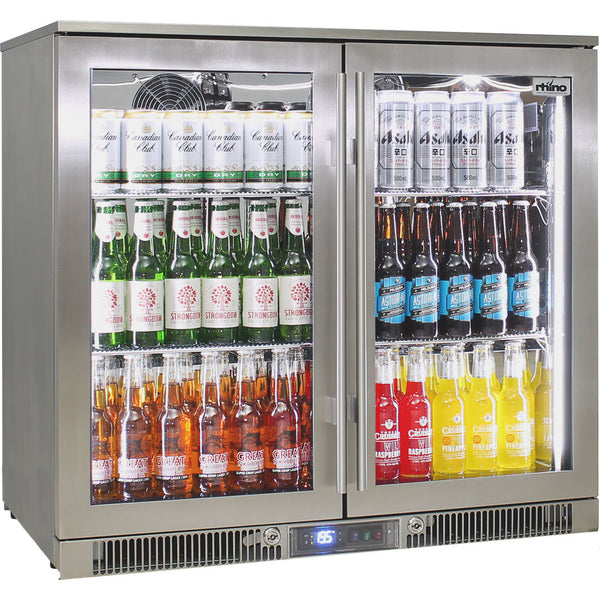
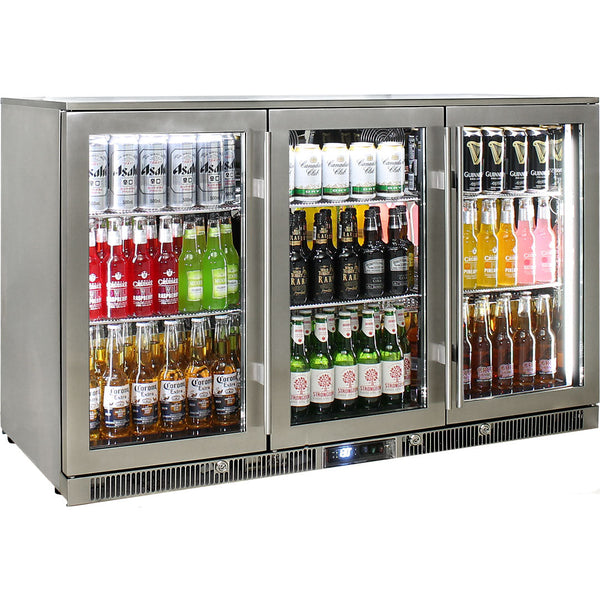
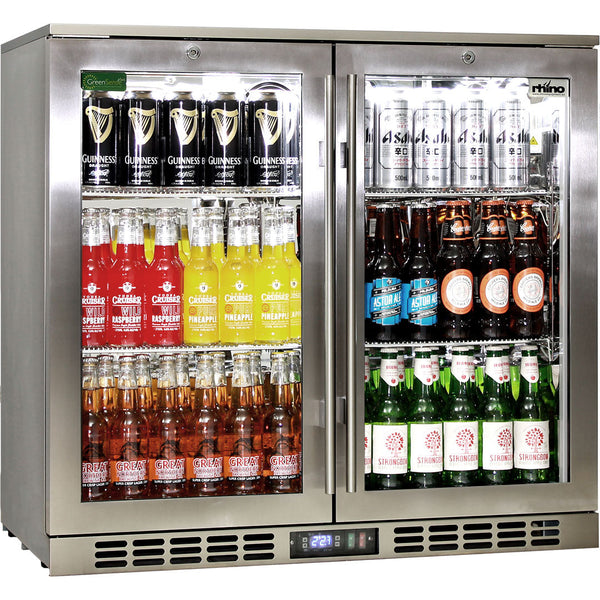
The Rhino SG2H-HD is a workhorse for pubs and clubs, with a 208L capacity, heated glass to stop condensation, and a robust 304 stainless steel build. It’s designed to run efficiently and quietly (43 dB), but the heated glass and high ambient rating mean it draws 3.21 kWh/24hrs. At $0.32 per kWh, that’s about $1.03 per day, or $375 per year. For venues where condensation is a constant battle, that’s a fair trade-off for reliability and clear visibility.
Rhino SG2H-B: Energy Efficiency Champion
If low running costs are your top priority, the SG2H-B is hard to beat. With the same 208L capacity and dual doors, it uses just 2.01 kWh/24hrs — saving you around $141 per year compared to the SG2H-HD. It achieves this with low energy fans, an efficient controller, and Low E glass. For most indoor or protected alfresco settings, it’s a smart choice for both commercial and home use.
Schmick JC165: Compact and Cost-Effective
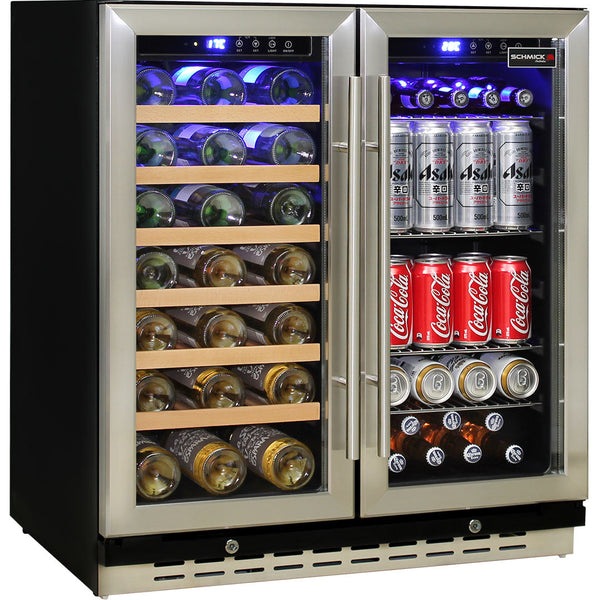
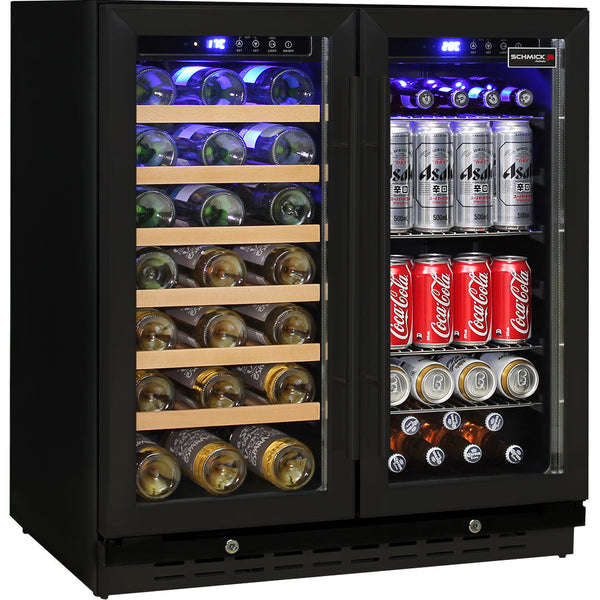
The Schmick JC165 is ideal for smaller venues, bottle shops, or home bars. With 165L of space and dual temperature zones, it sips just 1.23 kWh/24hrs — that’s about $0.39 per day, or $144 per year. It’s designed for indoor use (ambient max 32°C), so it’s best kept out of the harshest Aussie heat. If you want to chill both beer and wine without blowing the budget, it’s a solid performer.
Schmick SK246-HD: Premium Features, Reasonable Running Costs
For those needing more capacity, the Schmick SK246-HD offers 257L, heated glass, and a mirror-finish stainless interior. Despite its size and features, it uses 2.7 kWh/24hrs — about $0.86 per day, or $318 per year. It’s suitable for both indoor and alfresco use, and the heated glass is a big plus in humid or coastal environments.
Why Bar Fridge Running Costs Matter for Australian Businesses
For commercial operators, running costs aren’t just a line on the power bill — they’re a key part of your profitability. Multiply a $100 difference per fridge by a fleet of 10 or 20 units, and you’re talking thousands of dollars per year. Even for home users, the savings add up over time, especially as energy prices continue to rise.
Choosing an energy-efficient bar fridge isn’t just about saving money. It’s also about reducing your environmental footprint, complying with sustainability targets, and ensuring your equipment is up to the demands of the Australian climate. All the models discussed here are built for local conditions, with features like lockable doors, robust construction, and quiet operation (all rated at 43 dB).
What Else Should You Consider?
- Noise: All the fridges here run at 43 dB, which is quiet enough for most indoor and alfresco settings. If you’re particularly sensitive to noise, check the product page for the latest specs or ask us for advice.
- Build quality: Stainless steel interiors and exteriors (like those on the Rhino and Schmick SK246-HD) are more durable and easier to clean than plastic.
- Warranty and support: Commercial fridges work hard. Make sure you’re buying from a reputable supplier with solid after-sales support.
- Flexibility: Adjustable shelves, dual zones, and front-venting designs make installation and use much easier in tight or custom spaces.
FAQ: Bar Fridge Running Costs in Australia
How much does it cost to run a commercial bar fridge in Australia?
It depends on the model, size, and features. For example, the Rhino SG2H-B uses 2.01 kWh/24hrs, costing about $0.64 per day or $234 per year at $0.32/kWh. Larger or feature-rich models like the Rhino SG2H-HD (3.21 kWh/24hrs) can cost over $1 per day. Always check the product page for the latest specs.
Are commercial bar fridges more expensive to run than domestic fridges?
Generally, yes — commercial bar fridges are designed for rapid cooling, frequent door openings, and higher ambient temperatures. However, efficient models like the Schmick JC165 (1.23 kWh/24hrs) are quite competitive with high-end domestic fridges. It all comes down to the specific model and how you use it.
Does heated glass increase running costs?
Yes, heated glass prevents condensation but does add to the energy consumption. For example, the Rhino SG2H-HD uses 3.21 kWh/24hrs, partly due to its heated glass feature. If condensation isn’t a big issue in your setting, a Low E glass model may be more efficient.
What’s the quietest commercial bar fridge?
All the models discussed here are rated at 43 dB, which is quieter than most commercial fridges on the market. For home or indoor entertaining areas, this level is generally unobtrusive.
How can I reduce my bar fridge’s running costs?
Choose the right size, keep the fridge full, install it away from heat sources, maintain seals and coils, limit door openings, and set the temperature sensibly. Opting for an energy-efficient model like the Rhino SG2H-B or Schmick JC165 is the best starting point.
Ready to Cut Your Bar Fridge Running Costs?
Whether you’re running a busy venue or just want to keep your home bar efficient, choosing the right commercial bar fridge makes a real difference to your power bill and your peace of mind. Explore our range of energy-efficient models, including the Rhino SG2, Schmick JC165, and Schmick SK246 — all distinct by design, built for Australian conditions, and backed by real-world performance data. Check the product pages for the latest specs and get in touch if you need expert advice for your venue or home.

Commercial Bar Fridge Running Costs: What to Expect in Australia
Running a commercial bar fridge in Australia isn’t just about keeping your drinks cold — it’s about understanding the real-world costs of doing so, especially with rising electricity prices and the demands of our climate. Whether you’re fitting out a pub, club, café, or your own home entertaining area, knowing your bar fridge running costs in Australia is crucial for budgeting, sustainability, and choosing the right unit for your needs. Let’s break down what you can expect to pay, how different models stack up, and what to look for if you want to keep your power bills in check.
What Impacts Bar Fridge Running Costs in Australia?
There’s more to a bar fridge’s running cost than just plugging it in and hoping for the best. Here are the main factors that affect your bottom line:
- Energy consumption (kWh/24hrs): The most direct measure of how much electricity your fridge uses.
- Ambient temperature: Australian summers can push fridges hard, especially in alfresco or commercial settings.
- Usage patterns: How often you open the doors, how full the fridge is, and what you’re storing all make a difference.
- Fridge design and efficiency: Features like heated or Low E glass, quiet fans, and ECO controllers can all impact energy use.
- Electricity rates: Most Aussies pay between $0.30 and $0.35 per kWh, but this can vary by state and provider.
Let’s get specific and look at some of the top commercial bar fridges available at KING CAVE, including the Rhino SG2, Schmick JC165, and Schmick SK246. We’ll use their actual tested energy consumption figures to show you what to expect in real dollars and cents.
Bar Fridge Energy Consumption: Real-World Data
Unlike domestic fridges, commercial bar fridges are built for rapid chilling, frequent access, and sometimes tough conditions. But that doesn’t mean they’re all power-hungry. Here’s a quick look at four popular models and their energy use, straight from the spec sheets:
| Model | Brand | Capacity (L) | Doors | Energy Use (kWh/24hrs) | Max Ambient (°C) | Noise (dB) | Location | Lockable |
|---|---|---|---|---|---|---|---|---|
| SG2H-HD | Rhino | 208 | 2 (1 x Left & 1 x Right) | 3.21 | 38 | 43 | Indoor/Alfresco | Yes |
| SG2H-B | Rhino | 208 | 2 (1 x Left & 1 x Right) | 2.01 | 38 | 43 | Indoor/Alfresco | Yes |
| JC165 | Schmick | 165 | 2 (1 x Left & 1 x Right) | 1.23 | 32 | 43 | Indoor | Yes |
| SK246-HD | Schmick | 257 | 2 (1 x Left & 1 x Right) | 2.7 | 38 | 43 | Indoor/Alfresco | Yes |
These numbers are based on certified testing — not just lab conditions, but real-world scenarios that reflect how these fridges perform in Australian venues and homes. Now, let’s translate those kilowatt-hours into actual running costs.
How to Calculate Bar Fridge Running Costs in Australia
The formula is simple: Daily kWh x Electricity Rate = Daily Running Cost. Multiply by 365 for an annual estimate. Here’s how it looks for each model, using a typical rate of $0.32 per kWh (right in the middle of the national average):
| Model | Energy Use (kWh/24hrs) | Daily Cost ($) | Annual Cost ($) |
|---|---|---|---|
| SG2H-HD | 3.21 | $1.03 | $375.17 |
| SG2H-B | 2.01 | $0.64 | $233.87 |
| JC165 | 1.23 | $0.39 | $143.90 |
| SK246-HD | 2.7 | $0.86 | $318.15 |
These are ballpark figures, but they’re grounded in the actual energy consumption data provided by the manufacturers. If your electricity rate is a bit higher or lower, just adjust the calculation. For the most up-to-date specs, always check the product page.
Comparing Commercial Bar Fridge Running Costs: What Makes the Difference?
Let’s dig into why there’s such a spread in running costs, even among fridges with similar capacities and features. Here are the main drivers:
1. Energy Efficiency by Design
Some fridges are simply built to use less power. For example, the Rhino SG2H-B is specifically designed for low energy consumption, clocking in at just 2.01 kWh/24hrs for a 208L, 2-door unit. That’s significantly less than the SG2H-HD model, which uses 3.21 kWh/24hrs for the same capacity. The difference comes down to features like low energy EC quiet fans and an energy-efficient controller.
2. Glass Technology: Heated vs. Low E
Heated glass (as found on the SG2H-HD and SK246-HD) prevents condensation in humid environments, which is a big plus for alfresco or commercial settings. However, the heating element adds to the energy draw. Low E glass, on the other hand, helps reduce condensation without the same power hit, as seen in the SG2H-B and JC165.
3. Ambient Temperature Ratings
All these fridges are tested to perform in high ambient temperatures — up to 38°C for most models. That’s essential for Australian conditions, especially if you’re running the fridge in a busy bar or alfresco area. If you push a fridge beyond its rated ambient max, expect energy use (and running costs) to climb as it works harder to keep cool.
4. Size and Capacity
Bigger fridges generally use more power, but not always in a linear fashion. For example, the SK246-HD offers 257L of space and uses 2.7 kWh/24hrs, while the smaller JC165 (165L) uses just 1.23 kWh/24hrs. If you only need to chill a modest number of drinks, downsizing can save you hundreds per year in power bills.
Practical Tips to Minimise Bar Fridge Running Costs
Even the most efficient fridge can chew through power if it’s not set up or used properly. Here’s how to keep your costs down:
- Choose the right size: Don’t pay to cool empty space. Match your fridge size to your actual needs.
- Keep it full (but not overloaded): A well-stocked fridge retains cold better, but don’t block the airflow.
- Install in a cool spot: Avoid direct sunlight and keep away from heat sources like ovens or deep fryers.
- Maintain seals and clean coils: Damaged door seals or dusty condenser coils force your fridge to work harder.
- Limit door openings: Every time you open the door, warm air rushes in. Train staff (or family) to grab what they need in one go.
- Set the right temperature: Don’t crank it colder than necessary. Most drinks are perfect at 2–4°C.
- Consider lockable models: All the fridges discussed here are lockable, which helps prevent unnecessary opening in commercial settings.
Case Study: Real-World Running Costs for Popular Models
Rhino SG2H-HD: Built for Tough Aussie Conditions
The Rhino SG2H-HD is a workhorse for pubs and clubs, with a 208L capacity, heated glass to stop condensation, and a robust 304 stainless steel build. It’s designed to run efficiently and quietly (43 dB), but the heated glass and high ambient rating mean it draws 3.21 kWh/24hrs. At $0.32 per kWh, that’s about $1.03 per day, or $375 per year. For venues where condensation is a constant battle, that’s a fair trade-off for reliability and clear visibility.
Rhino SG2H-B: Energy Efficiency Champion
If low running costs are your top priority, the SG2H-B is hard to beat. With the same 208L capacity and dual doors, it uses just 2.01 kWh/24hrs — saving you around $141 per year compared to the SG2H-HD. It achieves this with low energy fans, an efficient controller, and Low E glass. For most indoor or protected alfresco settings, it’s a smart choice for both commercial and home use.
Schmick JC165: Compact and Cost-Effective
The Schmick JC165 is ideal for smaller venues, bottle shops, or home bars. With 165L of space and dual temperature zones, it sips just 1.23 kWh/24hrs — that’s about $0.39 per day, or $144 per year. It’s designed for indoor use (ambient max 32°C), so it’s best kept out of the harshest Aussie heat. If you want to chill both beer and wine without blowing the budget, it’s a solid performer.
Schmick SK246-HD: Premium Features, Reasonable Running Costs
For those needing more capacity, the Schmick SK246-HD offers 257L, heated glass, and a mirror-finish stainless interior. Despite its size and features, it uses 2.7 kWh/24hrs — about $0.86 per day, or $318 per year. It’s suitable for both indoor and alfresco use, and the heated glass is a big plus in humid or coastal environments.
Why Bar Fridge Running Costs Matter for Australian Businesses
For commercial operators, running costs aren’t just a line on the power bill — they’re a key part of your profitability. Multiply a $100 difference per fridge by a fleet of 10 or 20 units, and you’re talking thousands of dollars per year. Even for home users, the savings add up over time, especially as energy prices continue to rise.
Choosing an energy-efficient bar fridge isn’t just about saving money. It’s also about reducing your environmental footprint, complying with sustainability targets, and ensuring your equipment is up to the demands of the Australian climate. All the models discussed here are built for local conditions, with features like lockable doors, robust construction, and quiet operation (all rated at 43 dB).
What Else Should You Consider?
- Noise: All the fridges here run at 43 dB, which is quiet enough for most indoor and alfresco settings. If you’re particularly sensitive to noise, check the product page for the latest specs or ask us for advice.
- Build quality: Stainless steel interiors and exteriors (like those on the Rhino and Schmick SK246-HD) are more durable and easier to clean than plastic.
- Warranty and support: Commercial fridges work hard. Make sure you’re buying from a reputable supplier with solid after-sales support.
- Flexibility: Adjustable shelves, dual zones, and front-venting designs make installation and use much easier in tight or custom spaces.
FAQ: Bar Fridge Running Costs in Australia
How much does it cost to run a commercial bar fridge in Australia?
It depends on the model, size, and features. For example, the Rhino SG2H-B uses 2.01 kWh/24hrs, costing about $0.64 per day or $234 per year at $0.32/kWh. Larger or feature-rich models like the Rhino SG2H-HD (3.21 kWh/24hrs) can cost over $1 per day. Always check the product page for the latest specs.
Are commercial bar fridges more expensive to run than domestic fridges?
Generally, yes — commercial bar fridges are designed for rapid cooling, frequent door openings, and higher ambient temperatures. However, efficient models like the Schmick JC165 (1.23 kWh/24hrs) are quite competitive with high-end domestic fridges. It all comes down to the specific model and how you use it.
Does heated glass increase running costs?
Yes, heated glass prevents condensation but does add to the energy consumption. For example, the Rhino SG2H-HD uses 3.21 kWh/24hrs, partly due to its heated glass feature. If condensation isn’t a big issue in your setting, a Low E glass model may be more efficient.
What’s the quietest commercial bar fridge?
All the models discussed here are rated at 43 dB, which is quieter than most commercial fridges on the market. For home or indoor entertaining areas, this level is generally unobtrusive.
How can I reduce my bar fridge’s running costs?
Choose the right size, keep the fridge full, install it away from heat sources, maintain seals and coils, limit door openings, and set the temperature sensibly. Opting for an energy-efficient model like the Rhino SG2H-B or Schmick JC165 is the best starting point.
Ready to Cut Your Bar Fridge Running Costs?
Whether you’re running a busy venue or just want to keep your home bar efficient, choosing the right commercial bar fridge makes a real difference to your power bill and your peace of mind. Explore our range of energy-efficient models, including the Rhino SG2, Schmick JC165, and Schmick SK246 — all distinct by design, built for Australian conditions, and backed by real-world performance data. Check the product pages for the latest specs and get in touch if you need expert advice for your venue or home.